Okay Heres the Question Again What Are the Churchill States Now Known as You Can
https://history.blog.gov.u.k./2013/12/02/we-shall-fight-on-the-beaches-iii-things-yous-never-knew-nearly-churchills-most-famous-speech communication/
Ask anyone to name Winston Churchill's best-known speech and nine times out of ten they will answer:
We shall fight them on the beaches.
It'southward not an exact quotation – Churchill did not include the word 'them' – but the power of the language is undeniable. At the aforementioned fourth dimension, the voice communication is not well understood, and many myths have grown up around it.
The total spoken communication can be read here , courtesy of the Churchill Centre.
In guild to appreciate information technology fully, it's necessary to grasp the very precise circumstances in which it was delivered on iv June 1940: presently afterwards the successful evacuation of British troops from Dunkirk, just before France's concluding defeat and surrender to the Germans that took place later that month. Hither are some facts about this magnificent oration that you lot may find surprising.
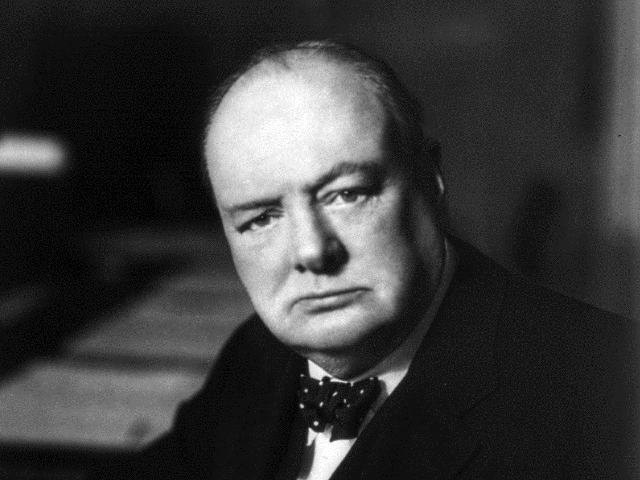
1) Churchill did not broadcast the speech...
Rather, he gave it in the House of Commons, beginning at 3.40 pm and sitting down at 4.14. By contrast with some later occasions – notably his 'finest hour' speech of 18 June – he did not repeat it over the airwaves that evening. The idea simply does not seem to have occurred to him or to anyone else. Instead, a BBC announcer read sections of it during the nightly news. You lot have, of course, heard him delivering it, but he did not make that recording until 1949, when he was persuaded to practice and so for the do good of posterity.
Few people, when they hear the oral communication on radio or Tv documentaries, are enlightened that they are listening to Churchill speaking not in 1940 but nine years afterward.Strangely, though, in that location is a popular myth that the spoken language was broadcast at the time, non by Churchill himself, only by an actor, Norman Shelley. Shelley did make a phonograph recording of a different Churchill speech in the aftermath of the 1942 victory at El Alamein although what use was made of it, if any, is unknown. He never claimed to have impersonated the Prime Minister over the airwaves, and though many historians take pointed out that the story is fake, information technology seems impossible to kill it.
2) The most important scrap rarely gets quoted...
Usually, when the recording is played today, it gets cut off subsequently the words 'never give up', as in this clip. Just in fact the sentence continued, as follows:
and fifty-fifty if, which I exercise not for a moment believe, this Island or a large part of information technology were subjugated and starving, then our Empire beyond the seas, armed and guarded by the British Fleet, would comport on the struggle, until, in God's good time, the New Earth, with all its power and might, steps forth to the rescue and the liberation of the old.
Why did Churchill say this? Why did he cull to qualify his keen heroic statement in this fashion? After all, information technology gave Nazi propagandists the take chances to merits that he was planning to skedaddle, as according to German radio,the war could, of course, never be conducted from another hemisphere unless Churchill and his confederates were there to conduct information technology.
In fact there was a compelling reason for him to brand this statement, which was that the American regime wanted him to. The USA of class was still neutral at this phase – Churchill'southward initial typhoon included a reference, which he later deleted by hand, to its 'strange detachment' in the confront of the Nazi menace. However, President Roosevelt made clear via secret channels that he wanted a commitment from Britain that even if she were defeated she would not surrender her fleet only would transport it to South Africa, Australia, Canada and other parts of the Empire. If this were done, American intervention could be expected to follow apace, he promised. So Churchill was giving him the message that he wanted to hear – a message that is now largely forgotten.
iii) Not everyone was inspired...
In the House of Eatables, some members were moved to tears, simply by no means all of them. Although the Dunkirk evacuation had been a remarkable success in its own terms, it had only been necessary because of the sweeping German victories that had humiliated United kingdom of great britain and northern ireland and her allies. Churchill rightly acknowledged that what had happened in France and Belgium had been 'a colossal military disaster'. The Labour MP Emanuel Shinwell recalled:We were very much depressed as a result of the events that led to him making this speech, and all his oratory could not remove that depression.
Churchill's wife Clementine told a friend that:
a great section of the Tory Party were not backside Winston & had received his great voice communication […] even in sullen silence.
Co-ordinate to the Ministry of Information's study on domestic morale, there was only limited bear witness that the spoken communication had energised the public and in fact information technology generated a rather downbeat reaction:
The grave tone of Churchill's speech made some impression and may have contributed in some measure to the rather pessimistic atmosphere of today. […] The contents of the speech were on the whole expected but some apprehension has been caused throughout the country on account of the PM'southward reference to 'fighting alone'. This has led to some slight increase in doubt about the intentions of our ally [France].
Here we meet the significance of Churchill's remark that he was confident that Britain could proceed the war for years, 'if necessary alone'. At this bespeak the French were still in the war, so the hint that they might drop out was alarming to many. Churchill's warning was timely and necessary just, by the aforementioned token, the business concern that it generated was likewise wholly understandable. It may well be true that millions of people were, at the aforementioned time, galvanised and invigorated past the speech communication. But the recorded reactions of contemporaries show u.s.a. that Churchill's task was in some means more complicated than is more often than not credited.
To make note of the complexity of the origins and responses to this wonderful speech by no ways implies criticism of Churchill. Rather, it prompts usa to rethink the factors that contributed to his oratorical success. He did not but provide uplifting soundbites; he presented a factual and reasoned case, provided the public with new information and, crucially, provided them with the context necessary to sympathize information technology. He was willing to run the risk of depressing his audience if this would serve the greater purpose of bringing them into contact with reality; he did not attempt to win like shooting fish in a barrel popularity by providing false hope. He followed this formula throughout the war, not always with complete success in terms of audition response, but with the ultimate achievement of establishing his credibility as someone who would evangelize the facts no matter how unpalatable they might be. This is a lesson which modern orators will practice well to follow.
Farther reading
The Roar of the Lion: The Untold Story of Churchill's World War 2 Speeches (OUP Oxford, 2013)
Related content
Winston Churchill Biography
Copyright Professor Richard Toye. This article was produced equally part of the No10 Invitee Historian series, coordinated by History & Policy.
Proceed tabs on the by - sign upward for our email alerts.
Source: https://history.blog.gov.uk/2013/12/02/we-shall-fight-on-the-beaches-three-things-you-never-knew-about-churchills-most-famous-speech/
0 Response to "Okay Heres the Question Again What Are the Churchill States Now Known as You Can"
Post a Comment